
Launch Your Own Online Grocery Store
When you’re ready for customers to browse products, add to cart, and check out, you move up to a Retail Catalog store. You curate the product catalog and define the stores you shop (Costco, Whole Foods, Kroger, local grocers, etc.).
This setup is ideal for operators serving repeat clients, property managers, and hospitality groups who expect a structured shopping experience.

Who Should Choose the Retail Catalog Model
Built for Operators Who:
• Serve repeat customers or property managers
• Offer pre-arrival stocking professionally
• Source from multiple grocery retailers
• Operate in seasonal or resort markets
• Are beyond the testing stage and ready for a true storefront

This is where your service becomes a structured business — not a form submission.

Market Flexibility Built In
Operators can source specialty grocers (bakeries, butcher shops, health markets) if their market supports it.
Alcohol inclusion varies by local law and operator discretion.
The platform does not mandate product categories — flexibility matters in hospitality and resort environments.
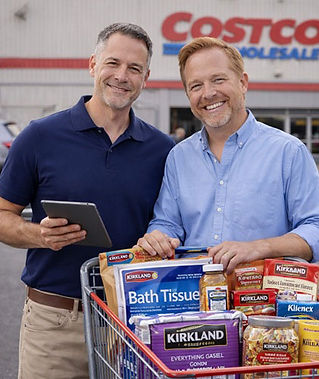
When to Move to the Costco Platform
As volume increases or warehouse sourcing becomes dominant, additional tools become necessary:
• Costco-specific lists and coupon data
• Costco inventory workflows
• Split-multipack tools
• Group-sharing tools
• Costco-branded positioning
Those tools belong to the Costco Platform — built for higher volume and warehouse specialization.
What the Retail Catalog Store Includes
• Full browse → cart → checkout storefront
• ~1,800 commonly stocked grocery items
• Structured product categories
• Continuous catalog updates
• Customer accounts + repeat ordering
• Reference pricing model
• Hybrid fee support
• Delivery & stocking workflows
Transparent Pricing. No Marketplace Cut.

Customers build from reference pricing and select how service is delivered:
• Planning & Sharing
• Delivery or Stocking
Operators review orders before deposits or delivery windows are confirmed — critical for hospitality and seasonal markets.
Most operators use a hybrid model:
• % of grocery subtotal
• Flat delivery or stocking fee