
Hybrid Grocery Platform — Combine Warehouse Strength with Everyday Flexibility

The Hybrid Platform allows operators to run a warehouse-anchored grocery service while also offering everyday retail flexibility.
This model reflects real customer behavior — bulk staples plus fill-in and specialty items — within one structured operational system.
When Hybrid Becomes the Right Move
Operators typically move Hybrid when:
• Warehouse orders are strong but incomplete
• STR or hospitality clients request retail-specific items
• Offices need both bulk staples and snack variety
• Customers want one service — not two separate orders
Hybrid often becomes the long-term stable model after market validation.


Hybrid Platform Business Advantage
Hybrid operators typically see:
• Higher average order values
• Strong repeat behavior
• STR + residential crossover demand
• Reduced churn from “missing items”
• Better positioning vs single-store competitors
How the Hybrid Platform Works
The platform keeps ordering structured while allowing sourcing flexibility.
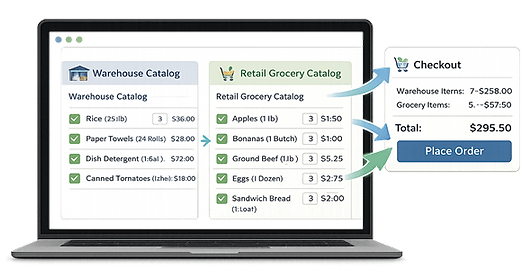
Operators typically structure Hybrid operations like this:
Costco Side
• Bulk staples
• Group provisioning
• High-repeat household categories
• STR arrival stocking
Retail Side:
• Fill-in items
• Produce flexibility
• Specialty diet items
• Brand-specific requests
Built for Real Service Environments
Commonly used in:
• STR / vacation rental provisioning
• Office pantry + commercial provisioning
• Senior & multi-unit community delivery
• Cleaning service grocery add-ons
• Food truck grocery pickup + meal pairing
This is where operators capture larger baskets and higher order frequency.

