

Office Pantry & Amenity Management
What This Opportunity Is (And What It Is Not)
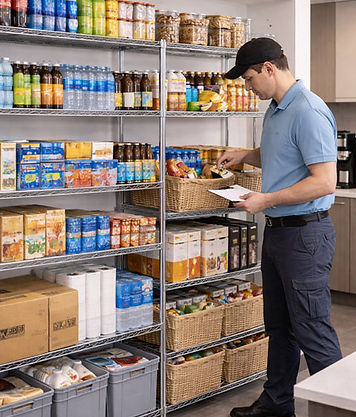
Office Pantry & Amenity Management is a fully managed workplace service, not basic grocery stocking and not consumer delivery. Operators take responsibility for curating, maintaining, and overseeing office pantries and shared amenity spaces so businesses don’t have to manage item lists, usage, or restock decisions.
This opportunity is not about running errands or responding to ad-hoc requests. It is about delivering a consistent, professional pantry experience that employees can rely on without internal oversight.

Who This Is For
Operators Who Want Fewer, Higher-Trust Clients
Ideal operators include:
-
Independent service providers comfortable making decisions
-
Existing office-facing service businesses expanding their offerings
-
Operators seeking predictable schedules and long-term accounts
This is not a high-turnover model. It rewards consistency, judgment, and professionalism.
How the Service Works
A Managed Model, Not a Shopping List
Unlike business stocking—where clients select items—Office Pantry & Amenity Management places the operator in charge.
Operators:
-
Select and rotate pantry items
-
Monitor usage patterns
-
Maintain agreed-upon standards and budgets
-
Restock on a predictable schedule
Clients delegate responsibility and expect the pantry to remain appropriate, stocked, and well maintained at all times.


What Operators Manage
Core Pantry & Amenity Categories
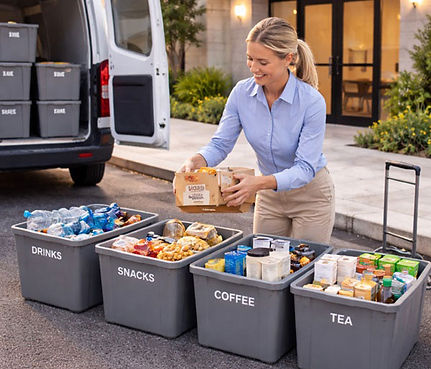
Pantry programs typically include:
-
Snacks and beverages
-
Coffee and breakroom essentials
-
Shared-use consumables
Operators use a combination of Costco bulk items and supplemental grocery items to balance value, variety, and availability.
How This Differs From Commercial Grocery Provisioning

Responsibility and Authority
Commercial Grocery Provisioning
Clients choose the items.
Operators execute approved lists.
Office Pantry & Amenity Management
Operators choose, manage, and maintain the pantry.
Clients expect outcomes, not decisions.
The work may look similar on the surface, but the role, authority, and value are fundamentally different.
Why This Beats Gig-Based Delivery

Revenue Model
This opportunity is designed around managed service value, not order volume.
Operators typically earn through:
-
Ongoing service fees tied to management and consistency
-
Stable restock schedules
-
Fewer clients with higher lifetime value
As trust increases, operational friction decreases.
✅ Delegated Responsibility
-
Clients hand off decisions instead of managing lists.
✅ Predictable Schedules
-
Restocks are planned, not reactive.
✅ Professional Positioning
-
Operators act as service partners, not couriers.
Built for Stability, Not Scale Pressure
Some operators will manage:
-
A small number of offices with premium expectations
Others may:
-
Layer this service onto existing office or facilities work
Growth is optional. Stability is built in.
Getting Started
Office Pantry & Amenity Management is built for operators who want predictable work, long-term clients, and clear service expectations—not on-demand tasks.
Getting started typically involves securing a small number of offices, defining pantry standards, and setting a consistent restock schedule. Once expectations are clear, the service settles into a repeatable rhythm that emphasizes reliability, presentation, and minimal client involvement.
Most operators start focused, refine the process with a few accounts, and expand only when the service runs smoothly. Growth is optional. Consistency is required.