
Workplace Grocery Pickup
One of the most effective locations for mobile grocery operators is the workplace.
Office parks, corporate campuses, and large employment centers bring together hundreds of potential customers in one place. Instead of traveling to a grocery store after work, employees can collect their grocery orders from a scheduled pickup location before heading home.
For operators, this creates an efficient way to serve many customers at a single location.

Why Workplace Pickup Works
Workplace pickup programs are efficient because they concentrate many potential customers in one location.
Employees already leave work at predictable times, making it easy to schedule structured pickup windows.

Benefits include:
• multiple customers served at one location
• predictable pickup times
• reduced travel for customers
• efficient order distribution
For operators, workplace programs can generate consistent weekly orders from the same group of customers.
Workplaces Often Generate Larger Grocery Orders
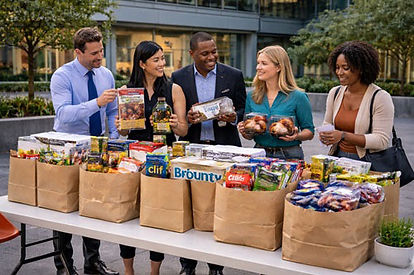
Workplace pickup locations often generate larger orders than typical household deliveries.
Employees frequently coordinate grocery purchases with coworkers and friends, especially when ordering warehouse items from Costco. Many Costco products are sold in multipacks, making them ideal for sharing between multiple people.
For example, several employees may combine their orders to share:
• beverage packs
• snack multipacks
• breakfast items
• bulk pantry products
When orders are shared among coworkers, the average order size can increase significantly.
Tiered Pricing Encourages Larger Orders

Some operators offer tiered pricing structures that reward larger orders.
For example, service fees may decrease as order size increases. This encourages coworkers to combine orders and share larger grocery purchases.
The Co-Op Shopper platform includes built-in tools that allow operators to implement tiered pricing structures directly within their website ordering system.
This helps operators increase average order value while keeping pricing transparent for customers.
Office Pantry and Breakroom Provisioning
Workplace pickup programs also open the door to corporate provisioning services.
Many offices regularly purchase items such as:
• bottled water
• coffee supplies
• snacks
• paper goods
• breakroom essentials
Operators can supply these items as part of scheduled workplace pickup programs, creating additional recurring revenue opportunities.
In many cases, a single workplace account can generate consistent weekly orders.
How Workplace Grocery Pickup Works
The process is simple and structured.

Employees Place Orders Online
Orders are submitted before a scheduled weekly cutoff time.
Operators Prepare Orders
Operators shop for groceries and organize each order into labeled bags or containers.
Orders are staged in insulated coolers to maintain proper temperature control.
Pickup at the Workplace
At the scheduled pickup time, operators set up a small staging area outside the workplace where employees collect their grocery orders.
Pickup typically occurs at the end of the workday.
Types of Workplaces That Work Well
Many types of workplaces are ideal for grocery pickup programs.
Examples include:
• office parks
• medical offices
• corporate campuses
• senior communities
• government offices
• technology companies
• manufacturing facilities

Locations with large populations—whether residential or corporate—provide a stable base for recurring weekly revenue.
Managing Workplace Pickup Programs
Workplace grocery programs require clear scheduling and structured order coordination.
Operators typically serve each workplace on a scheduled weekly pickup day, allowing employees to submit orders in advance and collect them at a designated pickup window.
This structured approach allows operators to prepare orders efficiently while serving multiple customers at one location.
Order Cutoff and Scheduling Controls
Most workplace pickup programs operate using order deadlines.
Employees submit grocery orders before a scheduled cutoff time, allowing the operator to plan sourcing and organize all orders before the pickup window begins.
Structured scheduling helps ensure orders are prepared accurately and ready for pickup when employees leave work.
Organizing Orders by Location
When serving multiple workplaces, operators can organize orders by location and pickup schedule.
For example:
• Monday — Office Park A
• Tuesday — Corporate Campus
• Wednesday — Medical Offices
• Thursday — Technology Company Campus
• Friday — Business Park Pickup Location
• Saturday — Community or Neighborhood Pickup
This type of structured schedule allows operators to serve multiple locations throughout the week while maintaining predictable pickup windows for customers.
As customer demand grows, operators can add additional workplaces or expand pickup windows at existing locations.